




What commercial grounds maintenance covers, and how to scope it
A plain guide for property and facility managers who need to write down what the grounds contract includes, area by area.
Short answer
Commercial grounds maintenance usually covers lawn mowing and edging, garden bed weeding and mulching, hedge and shrub pruning, irrigation checks, leaf and green waste removal, and a seasonal clean up. Tree work and new planting are normally priced separately. The scope should be written area by area so every quote covers the same job.
Key takeaways
- Routine scope is lawns, beds, hedges, irrigation checks and green waste. Write each one down by area, not as a single line that says “grounds maintenance”.
- Tree work beyond light pruning, new planting and storm clean up are usually separate quotes, so say so in the contract.
- Set a warm season and a cool season schedule, because lawns grow faster in warm weather and need more frequent mowing.
- Irrigation needs its own clause: who checks it, who reports faults and who adjusts the controller as the seasons change.
- Council can require a permit for pruning or removing trees, so a contractor should not be asked to cut anything protected without approval.
- Send every contractor the same written scope and offer a site walk, then compare what each quote includes, not just the total.
Jump to a section 8
- What commercial grounds maintenance usually includes
- How to scope grounds maintenance area by area
- Irrigation on a commercial site
- Trees, planting and other work outside the routine scope
- Strata schemes and common property grounds
- What changes the cost of commercial grounds maintenance
- Where Greenz Gardenscaping fits
- Common questions
What commercial grounds maintenance usually includes
“Grounds maintenance” means different things to different people. For one site manager it is a monthly mow. For another it is the lawns, the garden beds, the car park islands, the entry planting and the irrigation, all looked after on a schedule.
The useful move is to stop relying on the label and list what happens, where and how often. That is also how we approach commercial grounds maintenance: walk the site, list the areas, then agree the tasks for each.
| Area | Routine tasks | Usually priced separately |
|---|---|---|
| Lawns | Mowing, edging, line trimming, clippings removed | Turf renovation, returfing |
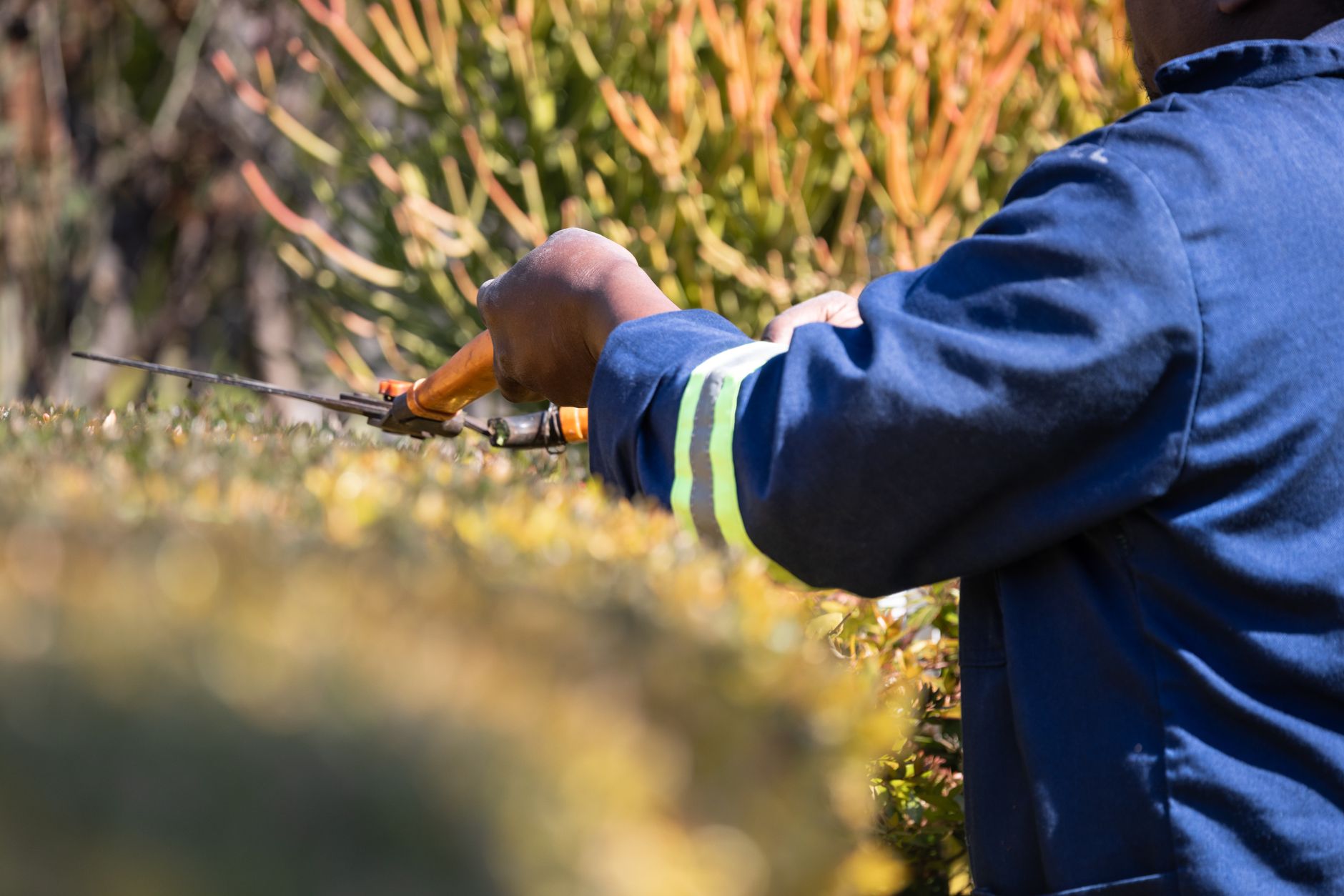
| Garden beds | Weeding, mulch top ups, pruning shrubs | New planting, replacing failed plants |
| Hedges | Shaping and height control | Taking a hedge down or heavy reduction |
| Irrigation | Checking controllers, heads and drippers, reporting faults | Repairs and new zones |
| Hard edges and paths | Blowing leaves and debris from paths, garden edges and car park islands | Pressure cleaning |
| Trees | Low pruning within reach, fallen branch clean up | Arborist work and anything needing council approval |
How to scope grounds maintenance area by area
A scope written as “general gardening” gets quoted as whatever each contractor assumes it means. A scope written by area gets quoted as the same job. It also gives you something to check a visit against.
Walk the site and list the areas
Start with the site plan and break the grounds into areas: front entry, street frontage, courtyards, car park edges, loading areas, rear boundary. Note anything that changes the work, such as slopes, stairs, tight access or areas that cannot be reached with a mower.
- Mark each area on the plan and give it a name.
- List the tasks for each area, using the table above as a starting point.
- Note what is excluded, such as trees that need an arborist or garden beds managed by another contractor.
- Add photos of the starting condition so everyone agrees where the site begins.
Set a seasonal schedule, not one frequency
One visit frequency for the whole year means paying for visits you do not need in winter and falling behind in summer. Lawn Solutions Australia notes that cutting no more than a third of the leaf height at each mow keeps the grass from being stressed and slowing its root growth. In warm weather that means more frequent mows, so the schedule should have a warm season column and a cool season column.
Name the months that count as warm and cool season in the contract, so nobody argues about when the schedule changes. Add items that happen once or twice a year, such as hedge shaping, mulching, fertilising and a seasonal clean up, as their own lines. Our lawn maintenance page covers the lawn side of that schedule.
Scoping a commercial site?
Send us the address, the areas and how often the site needs attention, and we will quote against your written scope.
Irrigation on a commercial site
Irrigation tends to fail quietly. A broken head or a controller still on a summer program in winter wastes water for weeks before it shows up on a bill, and a dead patch of lawn at the entry is the first thing visitors see.
Sydney Water’s Water Wise Guidelines apply to businesses as well as residents. At the time of writing they allow watering gardens and lawns before 10am or after 4pm with a hose, sprinkler or watering system, drip and smart systems can run at other times, and new turf or gardens can be watered at any time for 28 days after installation. These rules change, so the contract should point to Sydney Water’s current page rather than copy the times in.
- Who checks the system and how often, including a visual check of heads and drippers.
- Who adjusts the controller when the season changes, and who holds the access code.
- How faults are reported, and whether repairs need a quote first. See our irrigation repair page for the kind of faults that turn up.
Trees, planting and other work outside the routine scope
Some work should sit outside the routine contract so it can be quoted and approved on its own. That keeps the monthly scope clear and avoids surprises.
Trees are the main one. Councils control pruning and removal of many trees. Hornsby Shire Council, for example, says you will generally need to apply for a permit to prune or remove trees on private property, with some exemptions. Other Sydney councils have their own rules, so check with the council for the site before anyone picks up a saw.
- Tree work beyond light pruning within reach.
- New planting and garden redesign, which is a project rather than upkeep.
- Storm clean up and large green waste loads.
- Turf renovation or returfing after damage.
Strata schemes and common property grounds
If the site is a strata scheme, the same scope applies, with one extra step. The NSW Government says the owners corporation, acting through the strata committee, is responsible for gardens that are common property, and that minor work can be paid from the administrative fund while larger work is planned under the capital works fund.
In practice that means a strata manager should keep the routine scope separate from any bigger project, because they are approved and paid for differently. Our strata gardening page covers the strata side in more detail.
Check the strata plan first
Gardens inside a lot, or covered by an exclusive use by-law, may not be common property. Check the strata plan and by-laws before writing the scope.
What changes the cost of commercial grounds maintenance
We do not publish prices, because the same contract can mean very different jobs from one site to the next. These are the things that move the cost:
- Size and number of areas, and how much is lawn versus beds versus hedges.
- Visit frequency in each season.
- Access: stairs, slopes, tight paths, or no parking close to the work.
- Green waste volume and whether it leaves the site.
- Irrigation: how many zones and how much checking is included.
- Hours of work, if the site needs work done before opening or after closing.
- Write the scope by area and task.
- Add the warm and cool season schedule.
- List the exclusions.
- Send the same pack to each contractor and offer a site walk.
- Compare what each quote includes line by line.
Where Greenz Gardenscaping fits
We have worked across Sydney since 2014, for homes, strata schemes and commercial clients, from our base in Castle Hill. Our work includes garden and lawn maintenance, hedge trimming, turf management, fertilising, garden clean ups, and irrigation installation, repair and maintenance.
If you are scoping a site, send us the address and what you want covered through the quote page and we will quote against it.
Common questions
What is included in commercial grounds maintenance?
Usually lawn mowing and edging, weeding and mulching garden beds, hedge and shrub pruning, irrigation checks, leaf and green waste removal, and a seasonal clean up. Tree work, new planting and storm clean up are normally quoted separately.
How often should a commercial site be maintained?
It depends on the site and the season. Lawns grow faster in warm weather, so a schedule with a warm season and a cool season frequency suits most sites better than one fixed visit rate.
Do commercial sites have to follow Sydney Water’s watering rules?
Sydney Water says its Water Wise Guidelines apply to businesses as well as residents. They can change, so check its current page before setting a watering schedule.
Do I need council approval to prune or remove trees?
Often yes. Hornsby Shire Council, for example, says a permit is generally needed on private property, with some exemptions. Rules differ between councils, so check with the council for your site.
Who pays for garden maintenance in a strata scheme?
The NSW Government says minor work on common property can be paid from the administrative fund, while larger work is planned under the capital works fund.
How do I compare commercial grounds maintenance quotes?
Give every contractor the same written scope and schedule, offer a site walk, and compare what each quote includes line by line rather than only the total.
The short version
Commercial grounds maintenance works when the scope is written area by area, with a seasonal schedule, clear irrigation duties and a list of work that is quoted separately.
- List the areas and the tasks in each.
- Set warm and cool season frequencies.
- Give irrigation its own clause.
- Keep tree work, planting and storm clean up outside the routine scope.
- Send every contractor the same scope and compare line by line.
Commercial, strata and home gardens across Sydney
Tell us what the site is, what is in the scope and how often it needs attention, and we will come back with a quote.
Castle Hill · 0405 595 123
Sources
- Water Wise Guidelines, Sydney Water
- Strata repairs and maintenance, NSW Government
- Is there any truth to the only one third rule?, Lawn Solutions Australia
- Trees on private property, Hornsby Shire Council