
What a strata gardening contract should actually cover
A plain checklist for strata managers and committees writing or renewing a garden maintenance contract in Sydney.
Short answer
A strata gardening contract should list every common property area and the tasks done in each, how often each task happens in the warm and cool seasons, who handles irrigation, trees and green waste, what counts as extra work, how visits are reported, and how either side can end the agreement fairly.
Key takeaways
- In NSW the owners corporation must maintain and repair common property, and gardens are named as common property by the NSW Government.
- Write the scope by area and task, not as a single line that says “gardening”. Vague scope is where most disputes start.
- Set separate warm season and cool season frequencies, because lawns need mowing more often as temperatures rise.
- Say who adjusts irrigation, who reports leaks, and that watering follows Sydney Water’s Water Wise Guidelines.
- Keep routine upkeep (administrative fund) apart from one off works and improvements, which are priced and approved separately.
- Since 1 July 2025, unfair terms in standard form gardening contracts with owners corporations are banned, so check termination and variation clauses.
Jump to a section 10
- Who is responsible for strata gardens in NSW?
- What the scope of works in a strata garden contract should list
- How often strata garden tasks should happen through the year
- Irrigation and Sydney Water’s Water Wise Guidelines in a strata contract
- Trees on strata common property and council approval
- Which strata fund pays for garden maintenance and extra works
- Strata gardening contract terms that protect the owners corporation
- How to compare strata garden maintenance quotes fairly
- Where Greenz Gardenscaping fits for strata schemes
- Common questions
Who is responsible for strata gardens in NSW?
Before anyone writes a scope of works, it helps to be clear about whose garden it is. The NSW Government’s strata repairs and maintenance guidance says the owners corporation or strata committee must repair and maintain common property, and it gives “driveways and gardens” as examples of common property. Owners look after anything within their own lot.
That duty comes from section 106 of the Strata Schemes Management Act 2015. Lawyers at Bartier Perry describe it as a duty that “looks backwards” at existing problems, while improving or adding to common property falls under section 108 and needs a special resolution. That split matters for a gardening contract, because routine upkeep and a garden redesign are approved and paid for differently.
It also has more teeth than it used to. From the end of October 2025, NSW Fair Trading gained powers to issue compliance notices and enter enforceable undertakings with owners corporations that do not meet their duty to maintain and repair common property.
Check the by-laws and the plan first
Some courtyards and garden strips are lot property or exclusive use common property, and the by-laws may make an owner responsible for them. Mark those areas on the site plan and leave them out of the contract unless the owners corporation has agreed to maintain them.
What the scope of works in a strata garden contract should list
The single most useful thing a committee can do is replace “general gardening” with a scope that names each area and what is done there. A contractor quoting “general gardening” and a contractor quoting a written scope are not quoting the same job, and the difference only shows up months later when the hedges have not been touched.
Walk the site with the strata plan and break it into areas: front entry, street verge, internal courtyards, pool surrounds, driveway edges, car park islands, rear boundary. Then list the tasks for each. This is the same structure we would expect any strata garden maintenance quote to follow, whoever writes it.

| Area or item | Tasks to list | What to write down |
|---|---|---|
| Lawns | Mowing, edging, line trimming, clippings removal | Cut frequency by season, and whether clippings are taken away |
| Garden beds | Weeding, mulching, pruning shrubs, replacing failed plants | Weeding frequency, mulch top ups per year, who pays for replacement plants |
| Hedges | Shaping and height control | Target height, how many trims a year, which hedges are included |
| Trees | Low pruning within reach, leaf and debris clean up | What is excluded and needs an arborist or council approval |
| Irrigation | Checking controllers, heads and drippers, reporting faults | Who adjusts programs, who repairs, how faults are reported |
| Hard surfaces | Blowing paths, removing weeds from paving and gutters at ground level | Which paths, driveways and car park areas are in scope |
| Green waste | Removal from site | Whether it is included or charged separately |
Lawns, edges and garden beds
These are the visible, weekly or fortnightly items, and the ones residents notice first. Spell out whether edging includes hard edges along paths and driveways, and whether weeding covers paving cracks as well as beds.
Hedges and shrubs along boundaries
Give a target height and say which side of a boundary hedge is in scope. A hedge on a shared fence line can be partly the neighbour’s responsibility, and a contract that is silent on it invites an argument.
Green waste and clean up after each visit
Say whether all clippings, prunings and leaf litter leave the site on the day, and whether the contractor may use the building’s green bins. Overloaded bins are a common resident complaint.
Writing a strata garden contract?
Send us the scope of works and the site address and we will quote against it, area by area.
How often strata garden tasks should happen through the year
A single visit frequency for the whole year usually means paying for visits that are not needed in winter and falling behind in summer. Lawn Solutions Australia notes that as temperatures rise, grass needs more frequent mows to keep up with growth, and that it is generally better to mow lower in warmer months and higher in cooler months.
The same source explains why cutting little and often matters: taking no more than one third of the leaf height at a time limits the stress on the grass and lets the roots keep growing. A contract that sets one mow a month in January is effectively asking for that rule to be broken.
So the frequency schedule should have at least two columns, a warm season and a cool season, and say which months each covers.
- List every task from the scope of works in one column.
- Set a warm season frequency and a cool season frequency for each task.
- Name the months that count as warm season for this contract, so there is no argument about when the schedule changes.
- Add once a year or twice a year items separately: hedge shaping, mulching, fertilising, irrigation checks.
- Agree what happens when a visit is lost to rain: rescheduled within the week, or skipped and credited.
Write the visit log into the contract
Ask for a short record after each visit: date, areas covered, tasks done, anything that needs a decision. Photos help. It gives the strata manager something to check against the schedule without a site visit.
Irrigation and Sydney Water’s Water Wise Guidelines in a strata contract
Irrigation is the part of a strata garden most likely to fail quietly. A broken dripper or a controller still running a summer program in June wastes water for months before anyone notices on a water bill.
Sydney Water’s Water Wise Guidelines apply to all residents and businesses in Sydney, the Blue Mountains and the Illawarra. At the time of writing they allow watering gardens and lawns with drinking water before 10am and after 4pm, by hand held hose with an instant on and off nozzle, sprinklers or watering systems, with smart or drip systems allowed between 10am and 4pm. New turf and gardens can be watered at any time for 28 days after they go in. The rules do not apply to recycled water or rainwater tanks that hold no drinking water. Sydney Water changes these rules from time to time, so the contract should refer to its current guidelines rather than copying the times in.
Whether a scheme can fix faults itself or needs a specialist, the contract should say who does what. Our irrigation repair page covers the kind of faults that turn up on shared systems.
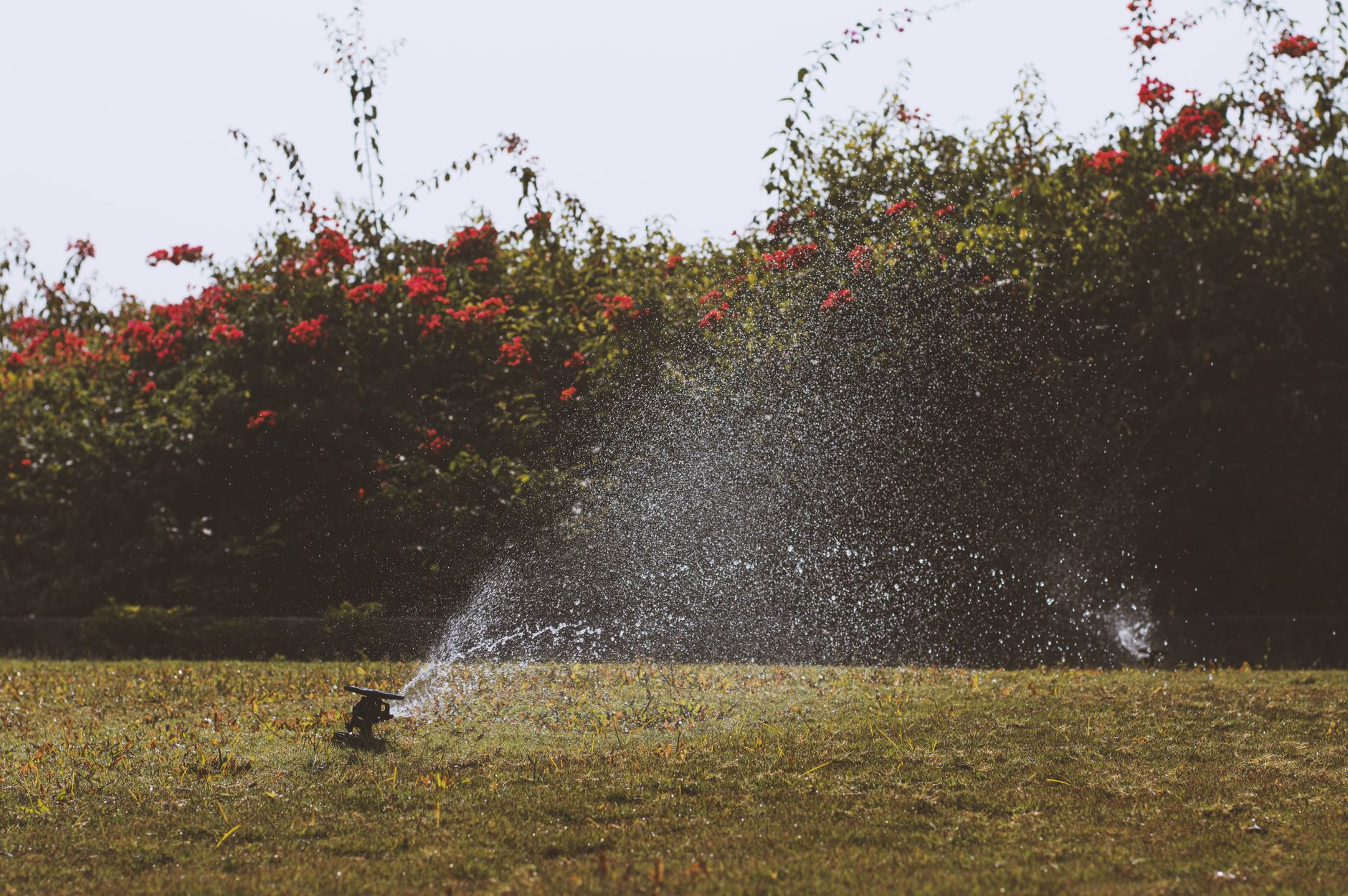
- Who adjusts the controller when the season changes, and who holds the access code or key.
- How often heads, drippers and zones are checked, and that faults are reported in the visit log.
- What the contractor may fix on the spot (a blocked or broken head) and what needs a quote first.
- That watering follows Sydney Water’s current guidelines, including no run off onto paths and driveways.
Trees on strata common property and council approval
Trees need their own clause, because councils control what can be done to many of them. Hornsby Shire Council, for example, says that to prune or remove trees on private property you will generally need to apply for a permit, and that for a tree on strata common property the owner’s consent comes from the body corporate. Other Sydney councils have their own rules, so check with the council for the site.
A gardening contract should make clear that tree work beyond light pruning within reach is outside the routine scope, that nothing protected is pruned or removed without the council approval the scheme needs, and that larger tree work goes to the committee as a separate quote.
Which strata fund pays for garden maintenance and extra works
The NSW Government’s page on managing strata finances lists garden maintenance and lawn mowing among the day to day expenses paid from the administrative fund. The capital works fund covers one off or major spending, such as painting or replacing common property, and the scheme’s 10 year capital works fund plan is approved at the AGM.
That is a good reason to keep the contract’s routine scope separate from everything else. Planting out a new bed, rebuilding a retaining garden or returfing a whole lawn is not routine maintenance, and depending on what it is it may be an improvement that needs a special resolution under section 108.
| Type of work | Usually paid from | How to handle it in the contract |
|---|---|---|
| Mowing, weeding, pruning, mulching, routine irrigation checks | Administrative fund | Fixed scope and schedule in the main contract |
| Repairing a failed irrigation zone or replacing dead plants | Depends on the scheme’s budget and by-laws | Agreed variation process with a written quote |
| New garden design, new structures or a major change to common property | Capital works fund or a special levy, with approval under section 108 where it is an improvement | Separate quote, approved by the owners corporation before work starts |
Strata gardening contract terms that protect the owners corporation
Since 1 July 2025, unfair contract terms are banned in standard form contracts for goods or services supplied to an owners corporation, and the NSW Government names cleaning and gardening contracts as examples. A standard form contract is one the owners corporation cannot change and can only take or leave. It applies to contracts entered into, renewed or varied after the change.
The government’s examples of potentially unfair terms include letting only one side end the contract, change its terms, or avoid its responsibilities, and penalising only one side for ending it. Read the termination and variation clauses with those in mind.

Term, notice and ending the contract
Set a term, a notice period that applies to both sides, and what happens to any prepaid visits if the contract ends early. A long fixed term with no way out for the owners corporation is the clause to question first.
Variations and extra work
Say who can approve extra work (usually the strata manager up to a set limit, above that the committee), that every variation is quoted in writing first, and that nothing outside scope is charged without that approval.
Access, safety and chemicals
Cover keys, gate codes, parking for the contractor’s vehicle and the hours work can happen. Ask for the contractor’s certificates of currency for their insurance before they start, and agree how residents are told before any herbicide or pesticide is sprayed in shared areas.
- Keys, codes and where the contractor parks
- Working hours that suit residents, especially for blowers and mowers
- Insurance certificates of currency held by the strata manager
- Notice to residents before spraying, and which areas are avoided
How to compare strata garden maintenance quotes fairly
Quotes are only comparable when every contractor prices the same written scope and schedule. Send the same document to each, and ask each to walk the site before quoting rather than pricing from photos.
We do not publish prices, because the same contract can mean very different jobs from one building to the next. These are the things that move the cost of a strata garden contract:
- The size and number of areas, and how much is lawn versus beds versus hedges.
- Visit frequency in each season.
- Access: stairs, narrow side paths, no parking, or equipment that has to be carried through a lobby.
- Green waste volume and whether it leaves the site.
- Irrigation: how many zones and how much checking is included.
- Slopes, batters and hedges that need extra time or gear to work safely.
- Write the scope by area and task, with the table above as a starting point.
- Add the warm and cool season schedule.
- Mark lot property and exclusive use areas that are excluded.
- Send the same pack to each contractor and offer each a site walk.
- Compare what each quote includes line by line, not just the total.
The same checklist works for commercial sites
Office parks, retail centres and industrial sites face the same questions about scope, frequency, irrigation and extra work, with different access and working hours. See our commercial gardening page if that is the site you look after.
Where Greenz Gardenscaping fits for strata schemes
We have worked as Sydney gardeners since 2014, for homes, strata schemes and commercial gardening clients, across the Hills District, North Shore, Hornsby, Inner West, Parramatta and Ryde. Our work covers garden and lawn maintenance, hedge trimming, turf management, fertilising, garden clean ups, and irrigation installation, repair and maintenance.
If you are writing or renewing a contract, send us the scope and the site address through the quote page and we will quote against it.
Common questions
Is the owners corporation responsible for strata gardens in NSW?
For gardens on common property, yes. The NSW Government says the owners corporation or strata committee must repair and maintain common property, and lists gardens as an example. Gardens inside a lot, or covered by an exclusive use by-law, may be an owner’s responsibility instead, so check the strata plan and by-laws.
Which strata fund pays for gardening?
The NSW Government lists garden maintenance and lawn mowing among the day to day expenses paid from the administrative fund. One off or major work is more likely to come from the capital works fund or a special levy, and an improvement to common property can need a special resolution.
How often should a strata garden be maintained?
It depends on the site, but the schedule should change with the seasons. Lawns need mowing more often as temperatures rise, so a contract should set separate warm season and cool season frequencies for each task rather than one figure for the whole year.
Can a strata gardener prune or remove trees on common property?
Light pruning within reach is usually part of routine work. Beyond that, many councils, Hornsby among them, require a permit to prune or remove trees on private property, and for strata common property the body corporate gives the owner’s consent. Keep major tree work out of the routine scope and quote it separately.
Do Sydney Water’s watering rules apply to strata buildings?
Sydney Water says its Water Wise Guidelines apply to all residents and businesses in Sydney, the Blue Mountains and the Illawarra, and they do not apply to recycled water or tanks that hold no drinking water. Link the contract to Sydney Water’s current guidelines rather than copying the times in, because they can change.
What makes a term in a strata gardening contract unfair?
Since 1 July 2025, unfair terms in standard form contracts with owners corporations are banned, and gardening contracts are named as an example. Terms that let only one side end the contract, change it or avoid its responsibilities, or that penalise only one side for ending it, can be unfair.
The short version
A strata gardening contract works when it names every common property area and the tasks in it, sets a seasonal schedule, deals with irrigation, trees and green waste, separates routine upkeep from extra works, and has fair terms on both sides.
- Confirm which gardens are common property before writing the scope.
- List tasks by area, with warm and cool season frequencies.
- Give irrigation, trees and green waste their own clauses.
- Keep routine upkeep apart from repairs and improvements, which are funded and approved differently.
- Check termination and variation terms against the unfair contract terms rules.
Strata, commercial and home gardens across Sydney
Tell us what the site is, what is in the scope and how often it needs attention, and we will come back with a quote.
Castle Hill · 0405 595 123
Sources
- Strata repairs and maintenance, NSW Government
- Managing strata finances and insurance, NSW Government
- Guide to strata law changes for strata committees and owners, NSW Government
- Strata reforms kick in with new powers for NSW Fair Trading, NSW Government
- Repairs or upgrades? Understanding sections 106 and 108 of the Strata Schemes Management Act 2015 (NSW), Bartier Perry
- Water Wise Guidelines, Sydney Water
- Trees on private property, Hornsby Shire Council
- What you need to know about mowing, Lawn Solutions Australia
- Is there any truth to the only one third rule?, Lawn Solutions Australia